
"Vision" VS "Fashion" business models comparison
In business, the "Vision" model and the "Fashion" model represent two distinct approaches to strategy, growth, and customer engagement. Here’s a comparison of their mindsets:
INSIGHTS
Isara Asanatham
11/13/20241 min read
In business, the "Vision" model and the "Fashion" model represent two distinct approaches to strategy, growth, and customer engagement. Here’s a comparison of their mindsets:
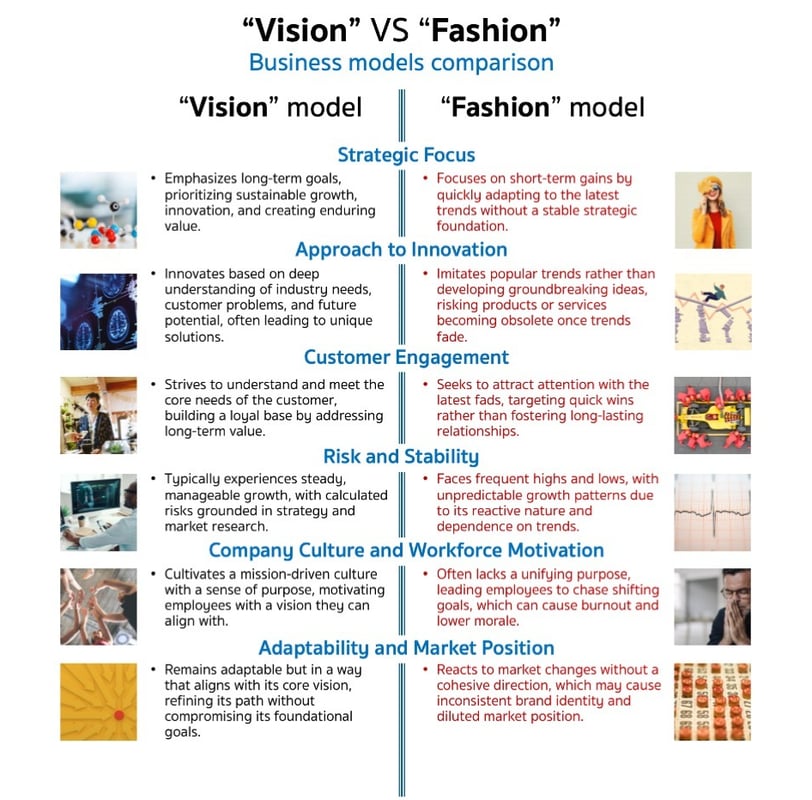
1. Strategic Focus
- Vision Model: Emphasizes long-term goals, prioritizing sustainable growth, innovation, and creating enduring value.
- Fashion Model: Focuses on short-term gains by quickly adapting to the latest trends without a stable strategic foundation.
2. Approach to Innovation
- Vision Model: Innovates based on deep understanding of industry needs, customer problems, and future potential, often leading to unique solutions.
- Fashion Model: Imitates popular trends rather than developing groundbreaking ideas, risking products or services becoming obsolete once trends fade.
3. Customer Engagement
- Vision Model: Strives to understand and meet the core needs of the customer, building a loyal base by addressing long-term value.
- Fashion Model: Seeks to attract attention with the latest fads, targeting quick wins rather than fostering long-lasting relationships.
4. Risk and Stability
- Vision Model: Typically experiences steady, manageable growth, with calculated risks grounded in strategy and market research.
- Fashion Model: Faces frequent highs and lows, with unpredictable growth patterns due to its reactive nature and dependence on trends.
5. Company Culture and Workforce Motivation
- Vision Model: Cultivates a mission-driven culture with a sense of purpose, motivating employees with a vision they can align with.
- Fashion Model: Often lacks a unifying purpose, leading employees to chase shifting goals, which can cause burnout and lower morale.
6. Adaptability and Market Position
- Vision Model: Remains adaptable but in a way that aligns with its core vision, refining its path without compromising its foundational goals.
- Fashion Model: Reacts to market changes without a cohesive direction, which may cause inconsistent brand identity and diluted market position.
The "Vision" model ultimately seeks to create a lasting impact with purposeful growth, while the "Fashion" model focuses on immediate popularity, often with less concern for long-term stability.
Innovation
Enhancing quality of life through sustainability.
Global
Solutions
Email:
sales@gvpcompany.co
WhatsApp:
+66-903269665
© 2024. All rights reserved.